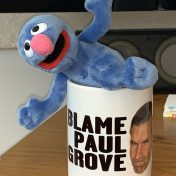
Good Day Grover Pickers,
Home field is barely an advantage for a football team anymore. It is functionally a myth, like the old idea of ‘Half-time adjustments’ or the Bermuda Triangle. There’s something to it, but not much, and nowhere near as much as average fans (NOT Grover Pickers) imagine.
Historically, before 2003 or so, home field was considered a 3 point advantage to the home team for gambling purposes. Today that number is really 1.5-2 points in the NFL and 2.5 for college games.
Real gamblers, the professionals whose livelihoods depend on beating the book, keep specific, separate home field numbers for every team they bet on. Most of these pros use a high-end digital product called “Excel”.
There is at least one actual academic study on the subject. Luke S. Benz, Thompson J. Bliss, and Michael J. Lopez authored the study titled “A comprehensive survey of the home advantage in American football”. Their study found home field advantage declining in the NFL and top-level college football, but not in amateur football. The suggestion is that better travel and instant replay have leveled the field. For high schools, bus rides, lack of instant replay, and maybe reliance on less experienced officials mean their home edge hasn’t moved.
If there is/was a home field advantage, it is due to either a curse within the stadium, a portent or harbinger from yesteryear, or the confluence of thousands of awful people masquerading as fans.
Let’s parse this week’s stadiums.
PROFESSIONAL AMATEUR FOOTBALL
BIG ASS STADIUMS
Penn State Nittany Lions @ Michigan Wolverines
Michigan Stadium (“The Big House”): Opened Oct. 1, 1927, costs $950,000. With 107,601, seats, this is the largest stadium in the country and third largest on planet earth behind Narendra Modi Stadium in India, 132,000, and Rungrado 1st of May Stadium in North Korea, 114,000, which even The Commissioner cannot verify.
Historically, the reported seating capacity always ends in a 1 because one seat was reserved for former coach Fritz Crisler. Crisler is famous, as you know, for inventing ‘Two-platoon football’. The location of the one seat was unknown and accepted to be mythical until an enterprising former Marine and UM Defensive Analyst researched the original architects drawings and discovered its location. He used that seat to scout opponents for several years and ever since 2024 the ‘1’ is referred to as the Connor Stalions Seat.
Mississippi State Bulldogs @ LSU Tigers
Tiger Stadium (“Death Valley”): Opened Nov. 25, 1924, with 12,000 seats. In the 1930s, Gov. Huey Long got around the fact that the state would pay for dorms but not seats by building dormitories into the stadium and putting the seats on top. Students lived inside the stadium for decades. Tiger Stadium now holds 102,321people and occasionally one live tiger. LSU is 338-108-13 playing after dark in Tiger Stadium.
Most fans who have been to a game in Baton Rouge will tell you this is the greatest venue in college football that is not the Rose Bowl. Conversely, The Commissioner is aware, now, of a team of middle-aged, undercover, angry ladies whose only purpose is to identify and jail opponent fans who try to scalp tickets in the LSU parking lot. I wonder if they include all those prisoners in the total attendance figure.
Alabama Crimson Tide @ Tennessee Volunteers
Neyland Stadium: Opened Sept. 24, 1921, as Shields-Watkins Field, a single 3,200-seat grandstand that cost $42,000. Half of the building costs were donated by Knoxville banker William S. Shields, so the patch of dirt was named for he and his wife, Alice, a former socialite from Chattanooga.
Today, Neyland holds 101,915, fans and the record crowd is 109,061. Replete with checkerboard end zones and the “Vol Navy” docked on the Tennessee River, Neyland became an iconic college football experience the moment after Pat McAfee dove into the river on live TV.
Gen. Robert Neyland was an Army engineer who coached Tennessee in three stints between 1926 and 1952 and is the great-great grand-uncle of Pat Summitt.
Auburn Tigers @ Georgia Bulldogs
The Deep South’s Oldest Rivalry
Dooley Field at Sanford Stadium: Opened Oct. 12, 1929 at a cost of about $360,000. The hedges are an original feature from 1929. Ten UGA mascots are buried in a vault in the stadium. These are all canine mascots, not the students in the costume. The Commissioner can confirm that as of this post, only the dead dogs, not the living ones, are entombed.
Today Sanford Stadium holds about 93,000. It is named for Oprah’s boyfriend, Steadman V. Sanford, who was the faculty leader who pushed for the stadium back when faculty were in favor of football. The ‘Dooley’ references a UGA coach who launched the career of the 14th United States Ambassador to the Commonwealth of the Bahamas, Herschel J. Walker.
Wisconsin Badgers @ UCLA Bruins
The Rose Bowl: 89,702– Opened in 1922 at a cost of about $272,000. The Rose Bowl is a National Historic Landmark. Without the Rose Bowl, there would be no pageant queens, no parades, no flowers, no sunsets on New Year’s Day, and no reason for the Big10 to ever exist.
UCLA would like to leave the Rose Bowl and play home games in SoFi Stadium in Inglewood so they may capture more luxury suite revenue. The City of Pasadena is suing to enforce a contract that keeps the Bruins in the Rose Bowl until 2044.
If you have ever wondered why UCLA is the most famous bad team in college football history, it is because they consider ideas like moving from Pasadena to Inglewood. It’s like casting Zendaya in your movie, then replacing her with former actor and current Skydance Corporation Chief Dipshit David Ellison.
MEMORIAL STADIUMS
Ohio State Buckeyes @ Indiana Hoosiers
Memorial Stadium: 53,524– Opened Oct. 8, 1960, at a cost of $4.569 million as “Seventeenth Street Football Stadium.” It took the Memorial name in 1971 from IU’s previous stadium, which had been dedicated to the university’s World War I dead. Its signature is “Hep’s Rock,” a three-ton limestone boulder left over from the 1960 construction.
This is the home of the current College Football National Champions. Since 1960, the Hoosiers have won 159 times at home, with fully 12% of those wins since Trump was elected a second time, which may seem like forever ago, but was less than two years.
Kentucky Wildcats @ Oklahoma Sooners
Gaylord Family Oklahoma Memorial Stadium at Owen Field: 80,000– The first game was played there on Oct. 20, 1923. The original 16,000-seat stadium cost about $293,000 and was named in honor of OU students and staff who died in World War I. Gotta keep the ‘Memorial’.
Bennie Owen coached OU from 1905 to 1926 and personally helped raise the money to build the original stadium and the field has carried his name since the 1920s. Technically, OU could sell that part of the name, but these are nice, Western-adjacent farm communities, full of good and kind people, and they would never do that to Bennie, yet.
The Gaylord family, longtime owners of The Oklahoman newspaper, helped pay for the 2003 stadium expansion. Gaylord owned lots of TV stations, the Grand Ole Opry, and other stuff, before selling out to Philip Anshutz, who owns everything in the world except Memorial Stadium and anything you believe you personally own.
BIG ASS MEMORIAL STADIUMS
Florida Gators @ Texas Longhorns
Darrell K Royal–Texas Memorial Stadium at Campbell-Williams Field: Opened Nov. 8, 1924. It cost $275,000, raised mostly by students and alumni, and was built as a memorial to the 198,520 Texans who served in World War I.
Current capacity is 100,119. This is essentially the world’s largest cattle pen and armory. Bevo, the live mascot, lives here as does Smokey, a Civil War artillery cannon. Few stadiums, and some nations, are this well defended.
The field is named for Heisman Trophy winners Earl Campbell’s Thighs and Ricky Williams’ Highs.
Darrell K. Royal coached Texas from 1957 to 1976 and won three national championships, which makes him the Bear Bryant of Texas and the equal of Bud Wilkinson and Barry Switzer and Tom Osborne.
CUTE LITTLE ACC-STYLE STADIUMS
Missouri Tigers @ Ole Miss Rebels
Vaught-Hemingway Stadium at Hollingsworth Field: 64,038– Opened Oct. 1, 1915, at a cost of about $96,000, and students helped build the first grandstand. It holds 64,038, making this the largest stadium in Mississippi, which is like being the wealthiest old fisherman adrift in a row boat on rough seas.
Ernest Hemingway has nothing to do with Ole Miss. His rival, William Faulkner, lived near Oxford, was briefly a student, and was an employee. However, Faulkner wrote about the South in ways much too accurate for Ole Miss alums to name a football stadium for him.
The Hemingway on the stadium is Judge William Hemingway. He was an Ole Miss law professor and longtime chairman of its athletics committee. Judge Hemingway is known for compiling and publishing the multi-volume “Hemingway’s Annotated Mississippi Code”, which you may even have on your own bookshelf. For most of the middle 20th Century, nearly every major trial in Mississippi used his numbering system and annotated statutory interpretations to argue law.
Johnny Vaught went 190-61-12 as head coach and won national titles in 1959, 1960 and 1962. Lane Kiffin was 55-19 with zero national championships. They might name a urinal for Lane.
The field is named for Ole Miss grad Dr. Jerry ‘Doc’ Hollingsworth. He gave $25 million to the athletic department in 2015 and many millions more over the previous 30 years. Doc earned his money as a Harvard educated doctor in Ft. Walton Beach Florida. He also cornered the import car market in panhandle as the owner of Quality Mercedes Benz, Toyota, BMW and Mazda automobiles.
It’s a little surprising that he is the only person on this list with car dealerships central to his wealth.
Virginia Cavaliers @ SMU Mustangs
Gerald J. Ford Stadium: 33,200– Opened Sept. 2, 2000, on the site of old Ownby Stadium, at a cost of about $42 million. It brought SMU football back from the ‘Death Penalty’ imposed by fellow NCAA competitors in the 1980’s due to SMU’s highly organized and efficient player payroll, that is now the envy of athletic departments everywhere.
Gerald J. Ford was NEVER the President of the United States. That is Gerald R. Ford, a Michigan man. Gerald J. Ford is a Dallas billionaire banker and SMU alumnus. He made his money owning and buying and selling banks, as one does.
Several of Ford’s adult children are currently suing him over control of Hilltop Holdings, a $2.2 billion financial services holding company. The kids claim the second wife, Kelli O. Ford, is manipulating the founder.
The Commissioner attempted to investigate the ramifications for the stadium, but SMU pony mascot, Peruna, had no comment.
Utah Utes @ Colorado Buffaloes
Folsom Field: 50,183– Opened Oct. 11, 1924, as Colorado Stadium. It was built in 271 days for $65,000, about $2.60 per seat, because it used wood instead of concrete. At 5,360 feet it sits 80 feet higher than Denver’s “Mile High.”
The biggest crowd in Folsom Field history attended in 1977 to see Fleetwood Mac (Rumours Tour) with Bob Seger & the Silver bullet Band, Firefall and John Sebastian. Fleetwood Mac defeated Firefall 24-17 that day.
Fred Folsom was a CU law professor who coached the team in two stints (1895–1902 and 1908–15) and came up with the plan to finance the stadium. It was renamed for him after his death in 1944 when he was accidentally trampled by Ralphie. (that’s not true, that’s just a fun little death joke).
Notre Dame Fighting Irish @ BYU Cougars
LaVell Edwards Stadium: Opened Oct. 2, 1964, as Cougar Stadium with about 28,800 permanent seats. It now holds 62,073.
Notre Dame, another private, faith-based college that has not won a national title since the 1980’s, has been to Provo before. In 1993 Notre Dame’s visit to Provo attracted a record crowd of 66,247.
LaVell Edwards coached BYU from 1972 to 2000 and won the 1984 national championship. The Cougars finished 13-0 that year, including a season ending win in the Holiday Bowl over Michigan before Christmas. Washington finished second because they had one loss and only beat Oklahoma in the Orange Bowl. These events, plus the invention of the personal computer, led to the BCS, which led to the College Football Playoff, which will lead to the demise of everything, and everybody, everywhere.
Thanks, LaVell.
HISTORIC (CODE FOR “IRRELEVANT”)
North Carolina Tar Heels @ Duke Blue Devils
Brooks Field at Wallace Wade Stadium: 35,018– Opened Oct. 5, 1929, it was funded by $100 community bonds that paid 6%. It’s the only venue to host a Rose Bowl on the East Coast. The game was moved from Pasadena in 1942 due to the attack at Pearl Harbor. Oregon State traveled by covered wagon across the entire United States, was certainly disappointed to see Durham, and then beat the crap out of the host team, Duke, 20-16 in front of 56,000 fans from New Jersey.
Brooks is Steve Brooks and his wife Eileen. They have given more than $20 million to the football program. The money comes from insuring RV’s out of an office in Miami. They might be the only people on earth who care about Duke football.
Coach Wallace Wade won three national titles at Alabama, then went 110-36-7 at Duke with zero national titles and they renamed the stadium for him.
Today, the stadium holds 35,000 fans, which overestimates interest by about 25,000. Wake County has abandoned public parks with more charm than Wallace Wade Stadium.
Arkansas Razorbacks @ Vanderbilt Commodores
FirstBank Stadium (Dudley Field): 35,000– Opened Oct. 14, 1922, it is the first stadium in the South built solely for college football. No word on when it will host its first competitive college football game, but could be any week.
William Dudley was a longtime Vanderbilt medical school dean and president of its athletic association, and the field carries his name.
FirstBank, a Nashville-based chain of 90 full-service branches, is the only thing at Dudley Field to ever appear to finish first in anything, and that is likely just made-up sales puffery.
CASH REGISTER STADIUMS
Arizona State Sun Devils @ Texas Tech Red Raiders
Galaxy Stadium and Cody Campbell Field: 60,000-Opened Nov. 29, 1947.
Former Red Raider lineman and regent Cody Campbell gave $25 million toward the south end zone project in 2021 and got the field named for him. Campbell dabbles in oil and gas, selling stuff he finds in the ground for billions of dollars every few years. He uses that money to purchase football players.
“Galaxy” is a Galaxy Digital Services, a data center developer with interests in Texas, Europe and Asia. They claim to ‘Grow the economy that runs on code,” with emphasis on moving finance on chain and providing computing power for AI.
Data Centers are having a moment and not everyone is happy about it. Galaxy operates the Helios Data Center campus near Lubbock. It might be noisy and it might suck up energy and folks may or may not be happy about the data center, but those same folks certainly love the NIL money behind their now Top 10 football squad.
If you ever visited Tomorrowland at Disney then you will recognize all of this, the money, the people, and the infrastructure, as the future we were promised.
Washington State Cougars @ Oregon State Beavers
Reser Stadium: 35,548– Opened Nov. 14, 1953, as Parker Stadium. It cost $330,463 and was paid for entirely by donations, with no taxpayer money. In 1999, Parker Stadium became Reser Stadium to honor Al and Pat Reser, Oregon State graduates from 1960 who built Reser’s Fine Foods, which sells potato salad, mashed potatoes, and macaroni salad in small plastic containers.
The original namesake, Portland businessman and building contractor Charles T. Parker, still has Parker Plaza outside the stadium. Parker’s company is famous in litigation circles for suing the federal government over joint-venture contracts involving building the Cascade Wagon Road, the Wunderlich Act, and skullduggery within the administrative appeals process.
Parker lost the case, then his stadium name. That court case is still the most exciting thing that ever happened in Corvallis.
Florida State Seminoles @ Miami Hurricanes
Hard Rock Stadium: 64,467– Opened in August 1987 as Joe Robbie Stadium, at a cost of $115 million, privately financed by the Dolphins’ founder.
This is mostly an F1 track and a museum containing the world famous and life-sized statue of Dan Marino.
FSU is so screwed. The Seminoles will play, and likely get blown out by, their rival, Miami, in a stadium that is sponsored by a company wholly owned by the Seminole Tribe of Florida, the same tribe the entire FSU brand is patterned on.
Hard Rock International started as an American hamburger restaurant in London that hung famous rock and roll memorabilia on the wall. They also sold famous t-shirts throughout the 1980’s. in 2007, the Seminole Tribe purchased Hard Rock International, which is now a global hospitality, entertainment, and gaming conglomerate.
Maybe that giant guitar-shaped Seminole Hard Rock Hotel & Casino in Hollywood, Florida is just a guitar hotel, but to FSU, it likely looks like a giant middle finger.
Update on FSU’s prospects: FSU athletics is very poor financially. There is no Saudi money in sight as the Kingdom has a more pressing Houthi problem to cope with right now. There isn’t even a lot of Seminole gambling money headed their way. There are no Private Equity groups willing to waste American dollars on this sinking ship. There are no 0% for the first 12 months loan offers from the First National Bank of Tallahassee in the offing… BUT, on the bright side, Louisiana Monroe called the ‘Noles about starting a new FCS conference together.
ALSO A STADIUM
Georgia Tech Yellow Jackets @ Virginia Tech Hokies
Lane Stadium/Worsham Field: 65,632– Opened Sept. 24, 1965 at an official cost of $3.5 million. The east stand is one of the largest single-tier grandstands in the world, and Virginia Tech has run out to “Enter Sandman” since 2000. It’s the most overrated entrance in all of sports.
This campus has similar aesthetic to the state prison seen in the movie The Shawshank Redemption.
Edward Hudson Lane, who died in 1973, was a VPI (Virginia Polytechnic Institute) alumnus who co-founded the Lane Company, the world’s largest maker of cedar chests. You may have put your socks in one of his chests this morning.
The field is named for donor and complete badass Wes Worsham. Worsham was the youngest of 11 kids, volunteered for the Korean War at 17, was a combat platoon leader, and earned, the very hard way, the Bronze Star and Purple Heart ribbons. He went on to be a pioneer in Virginia’s fire protection and sprinkler industry.
Kansas Jayhawks @ Kansas State Wildcats
Bill Snyder Family Stadium: 50,000– Opened Sept. 21, 1968, as KSU Stadium. It cost $1.6 million, paid for with student fees, ticket sales and donations.
Bill Snyder coached K-State from 1989 to 2005 and again from 2009 to 2018, turning one of the sport’s worst programs into a consistent winner. He is considered by those who do not get all of their information from ESPN College Gameday to be the greatest college coach of all-time.
Snyder is one of only three FBS coaches to coach in a stadium named for him, along with Bear Bryant and Shug Jordan.
Manhattan, Kansas is located just south of Nowhere, in a state with exactly 14 youth under the age 18 and only one of them plays football and it’s just 7-on-7.
They should name the entire state of Kansas for St. Joe, Missouri native Bill Snyder.
PROFESSIONAL FOOTBALL
NORMAL, PLAIN, MIDWESTERN STADIUM
Tennessee Titans @ Indianapolis Colts
Lucas Oil Stadium: 67,000– Opened in 2008 to replace the RCA Dome, at a cost of about $720 million. It has a retractable roof plus a retractable north window wall that frames the downtown skyline of, I assume, Indianapolis, but could be Muncie.
Lucas Oil Products makes lubricants, including engine oils, greases, gear lubes, as well as problem-solving additives and car-care products.
Based on the Colts alone, I’d stay away from any of their problem-solving additives. That’s not working.
QUIRKY STADIUMS
Seattle Seahawks @ Denver Broncos
Empower Field at Mile High: 76,125– Opened in September 2001 and built for roughly $400 million. It has gone through four names: Invesco Field, Sports Authority Field, Broncos Stadium at Mile High and, since 2019, Empower. The signature quirk is “Bucky,” the 27-foot bucking bronco statue atop the south scoreboard, a copy of the one that stood on old Mile High.
Empower is a retirement-services company that should spend more time and money convincing Bo Nix that it is time, friend, to live your future, and it’s not in the pocket.
Pittsburgh Steelers @ Tampa Bay Buccaneers
Raymond James Stadium: 69,218– Opened in 1998 to replace Tampa Stadium (the “Big Sombrero”), for about $168.5 million in public money. Its trademark is the 103-foot pirate ship in the north end zone that fires cannons after (IF?)Tampa Bay scores.
Raymond James is not just the first and middle name of most serial killers, it is also the name of the full-service wealth management and investment banking firm based in St. Petersburg, Florida.
Yes, a local financial services firm has partnered its brand with the local pirates. I’m sure the deal was signed at a Hooter’s, or maybe the Mons Venus, in the presence of several professional wrestlers and with a cut going to a couple of goombahs at the next table. Ah, sometimes I do miss my hometown.
Carolina Panthers @ Philadelphia Eagles
Lincoln Financial Field: 69,879– Opened in 2003 to replace Veterans Stadium, at a cost of about $512 million. The roof canopies are shaped like eagle wings.
Lincoln Financial Group, which took its name from murdered President Abraham Lincoln, does something with annuities, which are a simple financial ‘vehicle’ in which you give an insurance company your money and they give it back to you later, after you sign a very complicated contract that explains why you are mostly just tying up your money for the benefit of Lincoln Financial.
There is a movement afoot to re-shape the stadium’s eagle wings to more closely resemble Jason Kelce’s tush. There will be no updates on that.
New York Jets @ New England Patriots
Gillette Stadium: 65,878- Opened in 2002 to replace Foxboro Stadium, at a cost of about $325 million, largely paid for privately by owner Robert Kraft. It has a lighthouse with an observation deck that has never been explained to The Commissioner’s satisfaction.
Gillette is a razor company founded by King C. Gillette who invented the disposable-blade safety razor at the start of the 20th century. Before you read that sentence, you, your own self, may have enjoyed the use of the Gillette Fusion5/Pro Glide razor with its five-blade surface architecture, flexible pivoting heads, and microfins that significantly reduce irritation.
Nothing will ever reduce the irritation caused by the Patriots. (You thought I was going to say ‘Jets’, which is how you know I’ve trained you well!)
There is an embossed historical plaque near Gate 1 that explains how Gillette Stadium is most famous as the place where Belichick and Brady conspired to cheat and where Bill and Jordon went on their first date.
SAYING GOODBYE
Baltimore Ravens @ Cleveland Browns
Huntington Bank Field: 67,431– Opened in 1999 for the reborn Browns on the site of old Cleveland Municipal Stadium, at a cost of about $283 million. It has been Cleveland Browns Stadium, FirstEnergy Stadium, Cleveland Browns Stadium again, and Huntington Bank Field since 2025. Its signature feature is the Dawg Pound bleachers in the east end zone, and its location at the very edge of Lake Erie.
The Browns are planning a move to a doomed stadium in suburban Brook Park soon. No, I did not misspell ‘Domed’.
Huntington Bank is a regional bank. It’s nearly as exciting as the Browns helmet logo.
Los Angeles Chargers @ Kansas City Chiefs
Arrowhead Stadium: 76,416– Opened in 1972 at a cost of about $43 million as part of the Truman Sports Complex, next to the Royals’ Kauffman Stadium. In 2014 it set a Guinness record for the loudest outdoor stadium crowd (142.2 decibels).
The Chiefs plan to move to a $3 billion doomed stadium in Kansas when their lease expires in 2031. They will never improve on Arrowhead.
Arrowhead Stadium was designed by Charles Deaton, a man with no formal architecture training who somehow created the loudest and most distinctive stadium in professional football.
Deaton learned design at a New Mexico high school and then at Lockheed, the airplane manufacturer, during World War II. He would sculpt his ideas in clay first, then make drawings, which is the opposite of the normalized process.
Arrowhead was his only stadium design. It is iconic midwest, middle-America, mid-century. Everything about it, other than the noise level, is mid. And that makes it great.
Know what else is going to be mid? The 2031 Kansas City Chiefs.
BILLION DOLLAR HOMES
Chicago Bears @ Atlanta Falcons
Mercedes-Benz Stadium: 71,000– Opened in 2017 to replace the Georgia Dome, at a cost of about $1.6 billion. The roof is eight triangular panels that open like a camera aperture.
Karl Benz built the first gasoline-powered automobile, and “Mercedes” was the daughter of Emil Jellinek, the businessman who raced and sold the early cars under her name. There’s got to be more to that relationship, but you can Google that yourself.
The Falcons have won 34 games at the Mercedes Benz Dome, so each win has currently cost $47 million in stadium construction expenses. Here is what the future looks like for a stadium with a useful life of 30 years:
Falcons Construction Cost Per Win Projections Summary
• Current Winning Pace: 3.78 home wins per season
• Total Projected Wins (30 Seasons): 113.33 wins
• Expected Cost Per Home Win: $14.12 million
New Orleans Saints @ New York Giants
MetLife Stadium: 82,500- Opened in 2010 at a cost of about $1.6 billion, built and co-owned by the Giants and Jets. It is in New Jersey.
MetLife – another annuities company that can also insure your teeth and pets, among other things, globally.
Giants Construction Cost Per Win Projections Summary
• Current Winning Pace: 3.59 home wins per season
• Total Projected Wins (30 Seasons): 108 wins
• Expected Cost Per Home Win: $14.86 million
If you include the Jets wins at home over 30 years at MetLIfe Stadium, the combined shared ‘Cost Per Home Win’ remains exactly $14.86 million due to the mathematical power of Zero.
Arizona Cardinals @ Los Angeles Rams
SoFi Stadium: 70,240– Opened in 2020 at a cost of more than $5 billion, the most expensive stadium ever built. It is owned by Rams owner Stan Kroenke, and the Chargers are tenants. The UCLA Bruins will become tenants next season.
SoFi is an online bank and digital financial services company founded by Stanford Business School students in 2011.
Do NOT Google, “Hey, what was I doing with my time and talent in 2011 when I could have started a financial services company along with my best frienemies that would hold $36 billion in assets within 15 years?”
Rams Construction Cost Per Win Projections Summary
• Current Winning Pace: 4.71 home wins per season
• Total Projected Wins (30 Seasons): 141 wins
• Expected Cost Per Home Win: $35.35 million
If you include the Chargers’ wins at home over 30 years at SoFi Stadium, the combined shared ‘Cost Per Home Win’ remains exactly $35.35 million due to the mathematical power of Zero.
Buffalo Bills @ Las Vegas Raiders
Allegiant Stadium: 65,000– Opened in 2020 at a cost of about $1.9 billion. It looks like the “Death Star.” The natural-grass field sits in a giant tray that rolls outside so the grass can get sunlight. The 85-foot Al Davis Memorial Torch, honoring the late Raiders owner, is one of the largest 3D-printed structures in the world.
Allegiant is an airline. There is no truth to the rumor started here that all of Allegiant’s airplanes are 3D-printed.
Raiders Construction Cost Per Win Projections Summary
• Current Winning Pace: 3.14 home wins per season
• Total Projected Wins (30 Seasons): 94 wins
• Expected Cost Per Home Win: $20.15 million
Washington Commanders @ San Francisco 49ers
Levi’s Stadium: 68,500- Opened in 2014 in Santa Clara, about 40 miles south of San Francisco, at a cost of about $1.3 billion. It has a green roof and solar panels on the suite tower and more importantly, sits next to an electrical substation that emits high frequency ACL damaging death rays.
Levi Strauss was a Bavarian-born dry-goods merchant who, with tailor Jacob Davis, patented riveted denim work pants (blue jeans) in 1873.
If only the riveted jeans offered some protection from the sub-station death rays, we could get the first NFL team to play games in denim pants.
49ers Construction Cost Per Win Projections Summary
• Current Winning Pace: 4 home wins per season
• Total Projected Wins (30 Seasons): 120 wins
• Expected Cost Per Home Win: $11.66 million
Houston Texans @ Jacksonville Jaguars
Wembley Stadium, London: 90,000– Opened in 2007 on the site of the 1923 original with the famous twin towers. It cost about £798 million (roughly $1.5 billion at the time), making it one of the most expensive stadiums ever built when it opened. It is the largest stadium in the UK (England, Wales, Scotland, Northern Ireland).
Wembley Stadium is famous for having more toilets than any other venue in the world (2,618). A perfect setup for Texas v Jags.
THE GRANDADDY OF THEM ALL
Dallas Cowboys @ Green Bay Packers
Lambeau Field: 81,441- Opened in 1957 as City Stadium for $960,000, and renamed in 1965. It is the NFL’s oldest stadium in continuous use.
Earl “Curly” Lambeau founded the Packers in 1919 and played for and coached them through 1949, winning six NFL championships.
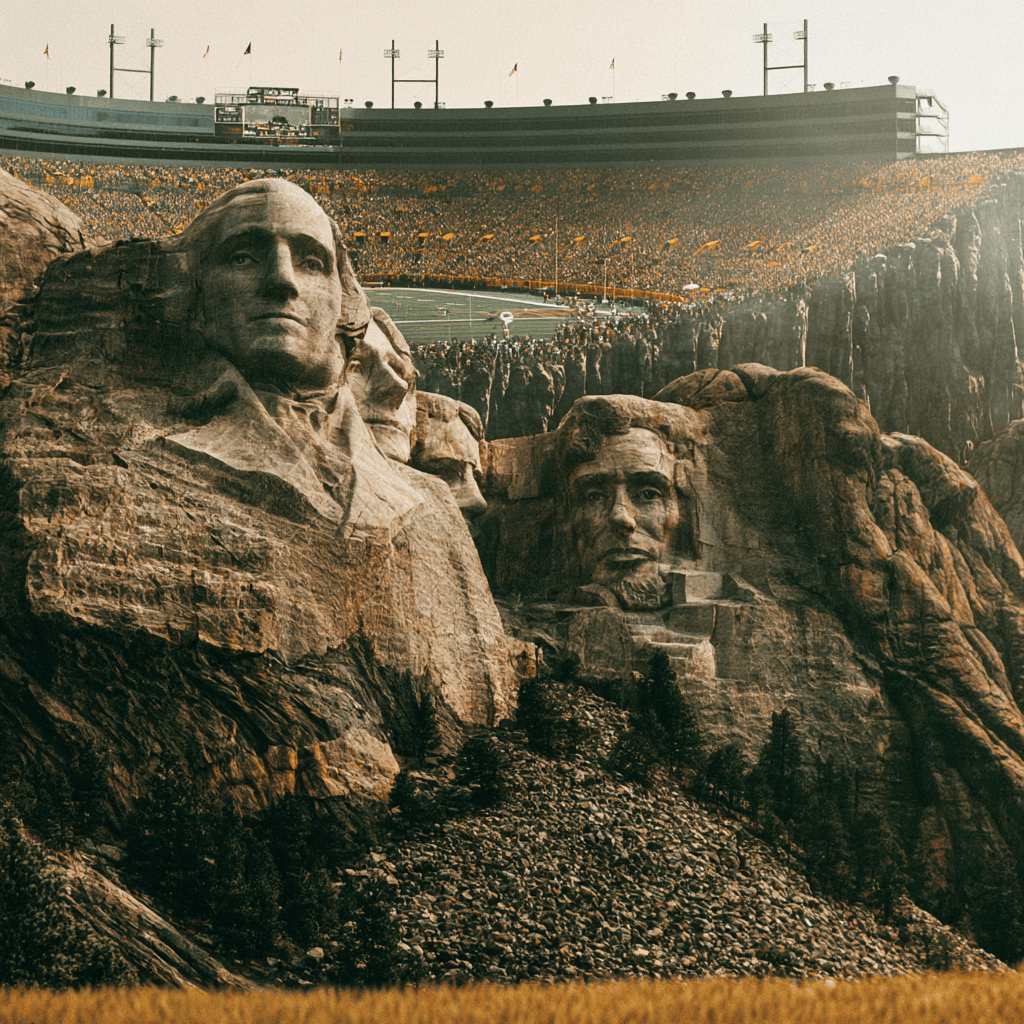
If you watch too much news and ever lose hope in America and/or our fellow Americans, remember, Lambeau Field exists and it should not. Owned by fans, built in a tiny neighborhood in a tiny town at the edge our nation. It is a thriving, iconic piece of our greatest, biggest sport. Lambeau is a place where the pinnacle of cold sports business, The Dallas Cowboys, who play in a billion dollar palace, can still lose to a team funded by meat packers and mostly drunk Wisconsinites wearing cheese hats over their iced hair.
Lambeau Field is embodiment of the Idea of America our founding fathers passed down to us. It is Life, Liberty and the Pursuit of Happiness expressed at plastic seats, luxury boxes, and porcelain urinals in the most glorious way.
Wherever you are sitting this weekend, I hope you enjoy the view.
Happy Picking,
The Commissioner

